Vamos Elfed Carajo!
Of Tolkien and Lothlórien and Leeds United
There's a tradition, running from the medieval Kabbalah through Le Guin's Earthsea and beyond and between, that names hold power, and that true power lies in knowing the true names of things. In England, as everywhere else, the history of a place is encoded in its name.
Take the place I grew up. I was brought up in a very small village in what was, until 1974, the West Riding (from the Norse word for "third part") of Yorkshire. The village was called Hillam, from the Old English for village (ham) on a hill.
I went to primary school in the adjoining village of Monk Fryston. There is a cluster in that part of Yorkshire of places called Fryston: Monk Fryston, Ferry Fryston, Water Fryston. The name derives from Old English: tūn (farmstead) of the Frisians, one of the many groups who migrated to England's eastern seaboard after the withdrawal of the Romans in the fifth century. Hillam first appears in the historical record in a charter of 963, recording a grant of land by King Eadgar described as "on Hillum tyesra oxena gang": in Hillam, two oxgangs. An oxgang was the amount of land an ox could plough in a year, roughly fifteen acres. The charter places Hillam among the settlements of Sherburn-in-Elmet.
I went to high school, from the age of eleven to eighteen, in Sherburn-in-Elmet. And here is where I start getting to the point. I am sure you have all been waiting.
Elmet. The suffix sits there in Sherburn's name, so familiar to anyone from that part of Yorkshire that it becomes invisible. A curiosity. A piece of administrative trivia. It is anything but.
Elmet was the last surviving Brittonic kingdom in what is now England. When the Angles and Saxons settled across the east and south of the island during the fifth and sixth centuries, they overran or absorbed the existing Romano-British political structures almost everywhere. Almost. Elmet, centred on what is now West Yorkshire and stretching roughly from the Pennines to the Humber lowlands, held out. Its population was Brittonic, its language a precursor to Welsh (in which the kingdom was known as Elfed), and it survived as a distinct political entity until around 616 or 617, when Edwin of Northumbria expelled its last king, Ceredig, and absorbed the territory into his own expanding realm.
That makes Elmet the last Celtic kingdom in England. The last remnant of an older Britain, swallowed not by dramatic conquest but by the slow, administrative logic of a larger neighbour. The kingdom did not fall in fire. It was reorganised.
The Forest of Leodis, the great woodland that covered much of Elmet's territory, gives us the name Leeds. Loidis appears in Bede's Ecclesiastical History, written a century after Elmet's fall, already as a regional name rather than a political one. The kingdom had become a place name. The nation had become a city. Only in a handful of villages, Sherburn-in-Elmet among them, did the older name survive openly rather than being buried under Norse or Anglo-Saxon layers.
And here is where J.R.R. Tolkien enters the story.
Tolkien's relationship with Yorkshire began not in a lecture hall but in a military hospital. In 1917, invalided home from the Somme with trench fever, he was sent to convalesce in the East Riding, spending time at camps and hospitals in Hull, Hornsea, Withernsea and Roos. He was twenty-five, already possessed by the mythology that would consume his life, and he was not resting. He was writing. During this period he began The Book of Lost Tales, the earliest prose version of his legendarium. Yorkshire gave him what the Western Front could not: time, and enough peace to process what he had seen.
It also gave him something more specific. In a woodland glade near Roos, among a stand of white-flowering hemlock, his wife Edith danced for him. This moment, by Tolkien's own account, became the origin of the tale of Beren and Lúthien: the mortal man who falls in love with an immortal Elven princess, the central romance of his mythology. The story that runs through The Silmarillion like a spine, that echoes in the love of Aragorn and Arwen in The Lord of the Rings, that Tolkien considered the most personal thing he ever wrote. It was born in a Yorkshire wood.
How personal? On Tolkien's grave in Wolvercote Cemetery, Oxford, beneath Edith's name is inscribed "Lúthien". Beneath his own, "Beren". He carried the Yorkshire glade to his death, and had it cut in stone. (The hemlock, incidentally, was cow parsley. Tolkien knew, but preferred the more poetic name. He was already mythologising.)
Three years later, in 1920, Tolkien returned to Yorkshire. He was appointed Reader in English Language at the University of Leeds, and would remain there until 1925, when he left for the Rawlinson and Bosworth Professorship at Oxford. During those five years he was promoted to Professor at the remarkably young age of thirty-two, published A Middle English Vocabulary, and produced, with E.V. Gordon, the edition of Sir Gawain and the Green Knight that remains a standard scholarly text a century later. He founded the Viking Club, a gloriously eccentric institution where students and faculty drank beer and sang original compositions in Old Norse and Old English. This was not academic recreation. It was the environment in which the Eärendel poems were refined, and the earliest drafts of the Fall of Gondolin took shape: the tale of a hidden Elven city, beautiful and doomed, destroyed by the forces of darkness.
Yorkshire, then, gave Tolkien two of the most important things in his legendarium: the love story that anchored its heart, and the lost-kingdom mythology that gave it its elegiac tone. Both were composed on Yorkshire soil. This much is well established.
What is less explored, and what I want to suggest here, is the question of what the landscape itself was telling him.
The standard account of Tolkien's imaginative sources is well established. Sarehole, the village on the edge of Birmingham where he grew up, gave him the Shire. The Somme gave him the Dead Marshes and the pitiless machinery of war. His scholarly work on Old English, Old Norse and Finnish mythology gave him the linguistic and narrative structures of Middle-earth. All true, all extensively studied.
But consider what Tolkien, a philologist of genius who read landscape through language as instinctively as breathing, would have made of the place names around him.
He was living and working in a city whose name derived from the Forest of Leodis, the great woodland of a kingdom that had been the last holdout of an older civilisation against an encroaching newer one. He was walking through a landscape whose place names still carried, for anyone who could read them, the ghost of a Brittonic world that had been overwritten but never fully erased. He was writing, during exactly this period, stories about the fading of the Elves, the loss of great forests, the drowning of ancient kingdoms, the long defeat of a beautiful older world by a rougher, more numerous, more administratively capable successor. Tolkien called this theme "the long defeat", and it runs through everything he wrote. It is not a large leap to suggest that the landscape of a real long defeat was part of what shaped it.
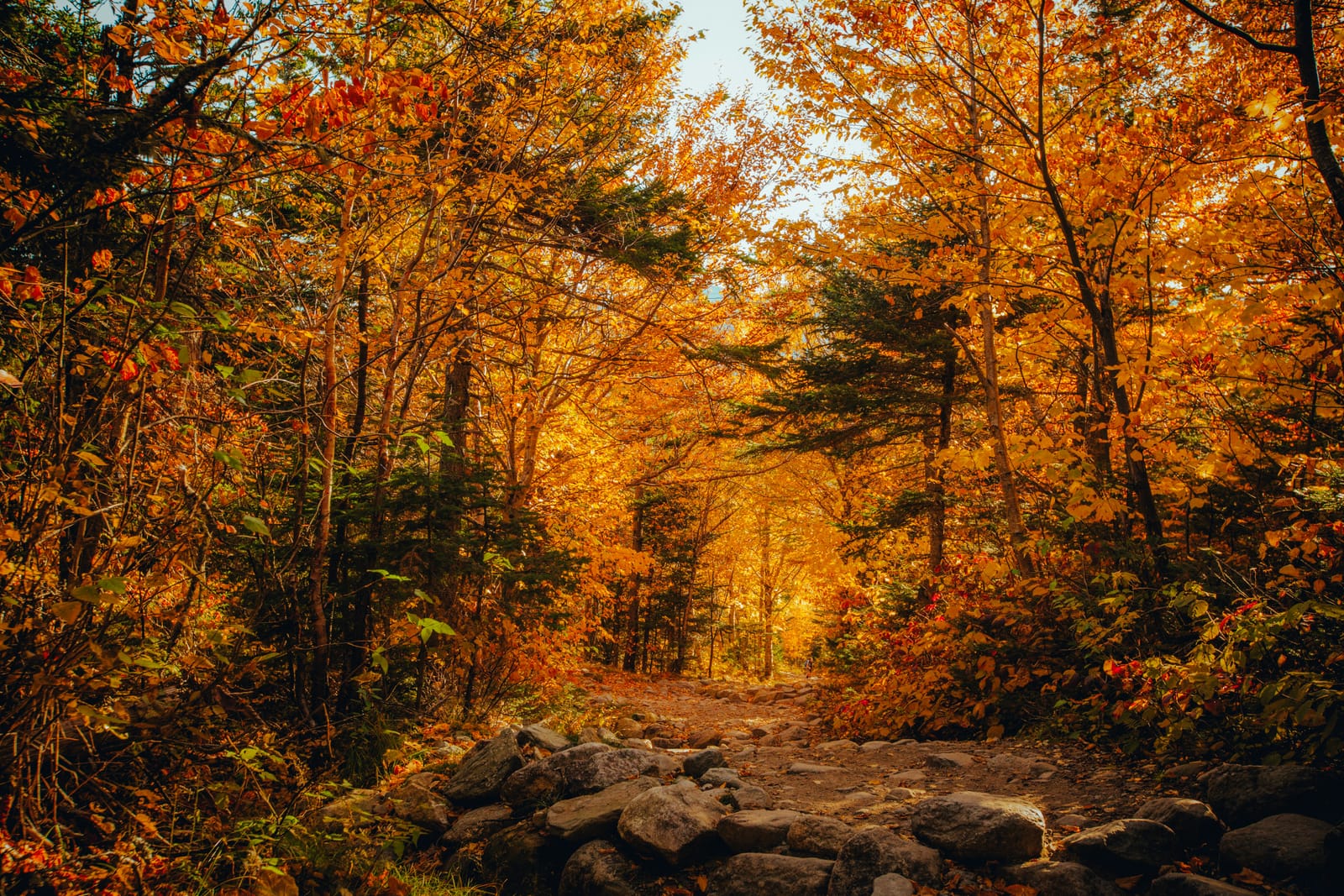
Think of Lothlórien, the golden wood. A last enchanted realm, ancient beyond reckoning, surrounded by a world that has moved on. Its people are leaving. Its power is fading. It will not be conquered. It will simply become irrelevant, and then it will become a memory, and then it will become a name on a map that nobody can read any more. I cannot prove that Tolkien was thinking of Elmet when he imagined Lothlórien. But if you have ever stood in Sherburn-in-Elmet and looked out across the flat, farmed land that was once the Forest of Leodis, the resemblance is difficult to ignore. This is what Lothlórien looks like after the Elves have gone.
Everybody looks west to Sarehole and south to the Somme. I think it is worth looking, too, at the eight formative years in Yorkshire, during which Tolkien composed the foundational love story and the central myth of loss, while living on a landscape that was itself a palimpsest of exactly the thing he was mythologising: a last kingdom of an older people, its forest felled, its language forgotten, its people absorbed, its name surviving only in the suffixes of villages that most of their inhabitants cannot parse.
And the story of Elmet's persistence goes deeper than names.
In 2015, a genetic study published in Nature, the People of the British Isles project run jointly by Oxford and UCL, mapped the fine-scale genetic structure of the British population. The population of West Yorkshire is genetically distinct from the rest of Yorkshire. The boundaries of that genetic cluster correspond closely to the probable boundaries of Elmet.
Fourteen centuries. The kingdom fell in 617. The Angles settled. The Norse came. The Normans reorganised everything. The industrial revolution remade the landscape entirely. And the population genetics still map to the boundary of a seventh-century Celtic kingdom. The people of Elmet, it seems, never left. The political entity was absorbed, the language replaced, the forest cleared, but the population itself stayed put so thoroughly that the boundary is still legible in their DNA.
There is a detail from even later that drives the point home. As late as 1315, a Florentine bill of sale for wool records a distinction between Leeds and Elmet. Seven hundred years after the kingdom's formal end, Italian wool merchants were still treating it as a separate commercial entity. The true name persisted in the ledgers of Tuscany long after it had faded from the memory of the people who lived there.
Tolkien, who spent his professional life studying how languages preserve what politics tries to erase, who built an entire mythology around the idea that the true names of things outlast the civilisations that coined them, was living on top of one of the clearest examples in English history of exactly that phenomenon. I suspect it shaped him more than the standard account allows.
Vamos Leeds Carajo. The phrase, which translates roughly as "Let's go Leeds, damn it" (although carajo is a considerably ruder word in Spanish), arrived at Leeds United with Marcelo Bielsa, the great Argentine manager, who brought it from his beloved Newell's Old Boys of Rosario. Leeds, the city that grew from the Forest of Leodis, has only one football club, and the fortunes of city and club have, in the modern era, tended to be intertwined: long eras of unfulfilled promise interspersed by brief periods of dashed hopes and embittered disappointment. And then, for one brief shining moment, Bielsa appeared, made football a thing of beauty, and, like all great wizards must, disappeared to his true home in the west.
The chant survived him, as these things do. The name outlasted the kingdom. The genes outlasted the conquest. The forest became a city and the city kept the forest's name without knowing it. And somewhere beneath all of it, in the place names and the haplotypes and the vowel sounds that still carry traces of something older than English, Elmet endures. Elfed endures.
Vamos Elfed Carajo.
Member discussion